Tuesday, November 19, 2024

Direct Mail Marketing - Best Practices, Tips for Success, and How to Measure Results

In this digital age, direct mail marketing remains a powerful tool to connect with your audience. Tangible, personal, and highly targeted, direct mail has a unique ability to engage recipients in ways that digital campaigns can’t. However, achieving success with direct mail requires strategic planning, attention to detail, and smart tracking methods. Here’s a guide to the best practices, how to maximize results, and ways to measure the effectiveness of your campaign.


Best Practices for Direct Mail Marketing

  1. Define Your Goals
    Start with clear objectives. Are you aiming to generate leads, drive sales, or build brand awareness? Defining your goals will help you craft a focused message and choose the right format.

  2. Target the Right Audience
    Use data to identify your ideal audience. Leverage customer demographics, buying behavior, and past interactions to create a highly targeted mailing list. A tailored message is far more effective than a generic one.

  3. Create a Compelling Offer
    Give your audience a reason to take action. Discounts, exclusive offers, or limited-time promotions work well. Ensure your call-to-action (CTA) is clear, direct, and easy to follow.

  4. Personalize Your Message
    Personalized mail has higher open and response rates. Use the recipient’s name, reference their past purchases, or create content tailored to their interests. Variable data printing allows you to customize each piece for maximum impact.

  5. Design Matters
    An eye-catching design with high-quality materials conveys professionalism and grabs attention. Use bold headlines, engaging imagery, and a clean layout to ensure your message is easy to read and visually appealing.

  6. Include a Strong Call-to-Action (CTA)
    Your CTA should clearly guide recipients on what to do next—whether it’s visiting a website, scanning a QR code, or redeeming a coupon. Make it simple and enticing.


How to Get the Best Results

  1. Combine Direct Mail with Digital Channels
    Enhance your campaign’s effectiveness by integrating direct mail with email marketing, social media, or retargeting ads. For instance, send a follow-up email after your mailer to reinforce your message.

  2. Use Trackable Elements
    QR codes, personalized URLs (PURLs), or unique promo codes help bridge the gap between print and digital while providing measurable data.

  3. Timing is Everything
    Align your direct mail campaigns with seasons, events, or promotions. For example, sending a mailer about holiday deals at the right time can boost engagement and sales.

  4. Test Your Campaign
    A/B test different offers, designs, and mailing lists to see what resonates best with your audience. Use the insights to refine future campaigns.


Measuring Results

  1. Response Rate
    Measure how many recipients took the desired action, such as calling a number, visiting a website, or redeeming a coupon.

  2. Conversion Rate
    Track how many of those responses led to a sale or desired outcome. This metric shows the campaign's ROI.

  3. Tracking Tools

    • QR Codes: Monitor scans to gauge engagement.
    • PURLs: Track unique visits to personalized landing pages.
    • Promo Codes: See how often a specific code is used to understand campaign performance.
  4. Cost per Response
    Divide the total cost of the campaign by the number of responses to evaluate its cost-effectiveness.

  5. Customer Retention
    Track repeat purchases or customer loyalty resulting from your direct mail campaign. Building long-term relationships is just as important as initial sales.


Why Direct Mail Still Works

Direct mail continues to deliver impressive ROI when executed thoughtfully. Research shows it’s 21% easier to process mentally than digital ads and yields a 70% higher brand recall. Its tangible nature creates a more memorable experience, and its versatility makes it a valuable addition to your marketing mix.

By following best practices, integrating direct mail with digital channels, and using measurable tools, you can elevate your campaigns and drive meaningful results. If you’re ready to take your direct mail marketing to the next level, Precision Services Group is here to help you every step of the way.


Ready to start your next direct mail campaign?
Let’s create something that resonates and delivers results. Reach out today to learn how we can bring your vision to life! 818-335-1930

Tuesday, February 20, 2024

Unveiling the Artistry of Dye Sublimation Printing

In the ever-evolving realm of printing technologies, dye sublimation stands out as a captivating and versatile method that has revolutionized the way we bring images to life on various surfaces. This printing technique, commonly known as dye sub printing, has gained immense popularity for its ability to produce vibrant, durable, and high-quality prints on a wide range of materials.

Understanding Dye Sublimation Printing At its core, dye sublimation printing is a process that involves the transfer of dye onto a substrate using heat. Unlike traditional methods that rely on direct printing or inkjet technologies, dye sublimation takes a unique approach. The magic happens when heat transforms solid dye particles into a gas without going through the liquid phase. This gas then permeates the surface of the substrate, creating a seamless and permanent bond with the material. 

Versatility in Applications One of the key attractions of dye sub printing is its adaptability across various surfaces. From textiles like polyester fabrics to ceramic tiles, metal, and even certain plastics, the possibilities are vast. This versatility makes dye sublimation an ideal choice for creating customized products such as apparel, promotional items, signage, and personalized gifts. 

Vibrancy and Durability Dye sublimation excels in producing prints with unparalleled vibrancy and detail. The process allows for a wide gamut of colors, ensuring that images pop with life and realism. Moreover, the prints are infused into the material rather than sitting on the surface, resulting in exceptional durability. This makes dye sublimation ideal for products that will endure frequent handling or exposure to the elements. Customization Beyond Boundaries Whether you are a business owner looking to create branded merchandise or an individual seeking unique personalized items, dye sub printing offers a world of customization possibilities. From intricate designs to photographic reproductions, this method allows for stunning, full-color prints that capture the essence of your vision. 

Eco-Friendly Advantages In an era where environmental sustainability is a growing concern, dye sublimation printing stands out for its eco-friendly attributes. The process generates minimal waste, as there is no need for excess ink or chemicals. Additionally, many dye sublimation inks are water-based, further reducing the environmental impact.

Need dye sublimation printing? Give me a call, I can help.


Wednesday, January 27, 2021

Save time and money with Inkjet

Everyone wants to save time and money. Our Canon ColorStream 6900 color inkjet press can do just that. Want to print a book? No need to print in signatures then cut and fold. The ColorStream along with our Hunkeler cut and stack system can print your book and finish in one pass, ready for binding on our PUR perfect binder, our high-speed saddle-sticher or our number of mechanical binding options. Need to do a mailing? We can print and address in one pass, no need to address after printing. So then why not add some personalization to the mailing, or how about some variable imaging to help catch your end users attention? We can help with that too! Healthcare, publishing, automotive, whatever your industry, inkjet is here to make printing easier, less expensive and faster. Another cost saving hint, inkjet pricing is based on ink coverage, so keeping your ink usage down can help with costs. Call or email me for more information, a quote or a demo: 818-335-1930 MikeSev@SapphireBusiness.Solutions
Color Book Blocks from the ColorStream 6900

Monday, January 14, 2019

Is There Really Still a Demand for Printed Magazines?

With so many publications being produced as digital-only, it's easy for the naysayers to continue to sound the "print is dead" alarm. But the reality is, print is far from dead, and as the following examples illustrate, plenty of publishers are embracing it. Publishing information about tech in print Take, for example, CNET, which puts out content about futuristic technologies. Why would this tech-savvy organization move away from web-only to launch a high-quality quarterly print magazine? Because its readers evidently demanded it. As CNET Co-Editor in Chief Connie Guglielmo explains, "We're platform agnostic. It's all about the reader and how they want to consumer content."1 Making fly fishing enthusiasts happy with print Of course, CNET is not the only publication whose readers are clamoring for print. The digital edition of Tail Fly Fishing Magazine had a readership of over 34,000, and a large percentage of these people made it clear that they wanted print. "We also completed our own independent research," adds Dr. Joe Ballarini, the magazine's founder, "which indicated that consumers really wanted a printed magazine. They want the ability to turn pages and pack a magazine for a flight or the daily commute."2 Supporting more meaningful lives with print When you think about the fact that Conteu Magazine is all about slow living and creating a more meaningful lifestyle, it's actually surprising that it didn't start as a print publication. After all, as ChloĆ© Kemp and Megan Rich, the magazine's founders and editors, say, "There's just something so special about print. In today's fast-paced lifestyle the idea of carving time out of your day to sit down and enjoy a magazine is something we, and others like us, crave." Their going-forward plan: continue to put out a quarterly magazine online, and add in an annual special print edition filled with unique content that cannot be accessed elsewhere.3 Meeting the needs of comic creators with print The founders of Comicker, a digital service for comic creators, quickly realized that print will be critical to their success. Just one year after first launching their online publishing service they launched a Kickstarter campaign to get their print publishing service off the ground. "Probably halfway in we realized we needed to seriously go to print as soon as possible," said co-founder Sean Williams.4 Republishing radio content in print Even radio shows are turning to print. The Montana Natural History Center recently published a book called "Field Notes," which is a collection of essays originally written for Montana Public Radio's program of the same name.5 Publishing your smart phone photos in print But perhaps the prize for "most unique new idea for a print publication" should go to Recently. Recently is not a publication per se – it's an iPhone app. It takes the most recent photos that you've snapped with your iPhone and automatically turns them into a high quality printed magazine, which is then mailed directly to your home. In short, Recently solves the problem of what to do with all of those photos you take. "Our customers are loving it, as are we," states Scott Valins, founder of Recently. "The need for paper and printed content are just as essential now, if not more, then when they were the only form of visual communication. Check our one of our publications:
- ChoosePrint.org

Monday, December 28, 2015

Is Print Personalization a Gimmick?
Print personalization — you hear about it everywhere. Use printed pieces to talk directly to recipients based on name, gender, past purchase history, or other information to achieve higher response rates and better return on investment (ROI). Is this really a smart marketing approach? Or is it just a gimmick to get you to buy more print? Consider the way you are being marketed to. When you shop online, cookies follow your every move so that when you return to the page, the view is customized to your preferences. At the grocery store, your receipt is printed with coupons based on the items you just purchased. When you receive mail from your financial services provider, it contains information only on those funds in which you have invested. Personalization has become so ingrained in our consumer experience that it’s just become our default expectation. If you aren’t incorporating 1:1 print into your print marketing, you are out of step with the overall trend in marketing. What about cost? Today, every marketing cost is increasingly scrutinized. Although marketers tend to think of 1:1 printing as a high-cost luxury, when handled properly, the opposite is true. 1:1 printing optimizes your marketing investment by not mailing irrelevant information to the wrong people. It makes every record count. 1:1 printing provides provable ROI so you can compare its value against other marketing methods and justify your spending based on real numbers. By generating higher response rates and per-order values from targeted customer segments, you can spend less and bring in more revenues. More relevant communications (including newsletters, bills and other correspondence) help companies improve customer retention and reduce turnover. This has a direct impact on the bottom line. From this perspective, 1:1 printing seems less like a luxury and more like a business necessity.

Tuesday, September 16, 2014

Choosing 1:1 Print in an Internet World

Cell phones. iPods. Laptops. Tablets. Where, in the ever-expanding channel mix, is there room for print? The Print Council recently put out a brochure, “Why Print? The Top Ten Ways Print Helps You Prosper,” listing ten reasons marketers should include print. Let’s look at several of them as they relate to a specific type of print—1:1 print—with our own take on why marketers can’t live without it. Print stays put. Unlike e-mail, which disappears within hours beneath hundreds of other e-mails, print stays where you put it. If it’s a personalized piece, the recipient might even tape it to the wall or tack it to a bulletin board. It’s not unusual for people to hold onto 1:1 print pieces for weeks, even months, after the promotion has expired. Print is portable. With print, there are no cables or wires. No batteries to run down. It doesn't have to be turned off on an airplane, and no software needs to be updated. It’s readable from all angles, and you can scan entire pages quickly, even multiple pages at once. Print drives higher ROI. Direct mail has a proven relationship to ROI. When you pair that with segmentation, targeting, and relevant personalization, ROI goes up even more. Print drives online behavior. Web sites are powerful marketing tools, but something has to drive traffic to them. More and more, marketers are seeing that as print. Use print, and traffic (and revenue) goes up. Drop print, and traffic goes down. According to a recent ComScore survey, online consumers who received a printed catalog were nearly twice as likely to make an online purchase at that retailer’s Web site. So want results? Think print! More specifically, think 1:1 print. Need ideas? Contact us. We’d be happy to help.

Tuesday, August 12, 2014

Boost Revenues by Targeting Lapsed Clients

Did you know that one of your deepest wells for bigger profits is your lapsed customer base? These are customers who have done business with you in the past, but for some reason have not come back. This isn’t always due to discontent with your company. Sometimes it’s forgetfulness. Sometimes people simply want to try something new, and once they’ve done so, stay with it for convenience. Or a competitor comes along and offers them a deal at just the right time. Assuming that lapsed customers had a positive relationship with you, re-engagement campaigns targeting those customers can yield tremendous results. Take the example of one optician in the United Kingdom. In its market, independent opticians have been facing increased price-driven competition from large specialist chains. It fought back using a direct mail campaign with personalized URLs and incentive vouchers to re-activate lapsed clients and increase traffic to the practice. The results? The practice reported 82 campaign recipients responding to the campaign and spending an average of £150 ($250) each after voucher reduction. This generated an immediate ROI of over 400%. Want results like that? Talk to us about targeting your lapsed customers!... If you would like to receive our free direct mail "Graffic Traffic" Magazine, please send me your information.

Thursday, July 17, 2014

Demystifying Basic Paper Terms

There is a bewildering variety of printing papers available, and deciphering a print quote can seem like reading a foreign language. Here are some of the most relevant terms you need to know. Basis weight is the weight in pounds of a ream (500 sheets) of a paper at its basic size, or the size of the uncut sheet supplied to the printer. For example, the basic size of book paper is 25 x 38 inches, and a ream weighing 70 pounds would be 70-lb. book paper. Sometimes metric is used: 70-lb. book paper is equivalent to 104 g/m2. Cover, card, and other thick stocks are often specified by thickness, measured in “points.” This is often abbreviated “pt.”— for example, “8-pt. cover.” One point is 1/1000th of an inch, so this means that the stock is 0.008 inches thick. Paper grade refers to the end use of that paper. Bond paper is used for letters and documents, book paper for books, offset for offset printing, and so on. Digital presses generally have their own grades. Thicker grades include cover, bristol, tag, and index. Paper is often coated during manufacture, which improves the reproduction of fine halftone screens and color fidelity. C1S means “coated one-side,” which is useful for labels, packaging, and other materials destined for single-sided printing. C2S means “coated two-side” and is preferred for two-sided commercial printing. Brightness refers to the percentage of light that is reflected from the sheet’s surface. Basic white copy paper has a 92 brightness. Brightness by component wavelength (red, green, or blue) is also determined for papers, as papers can reflect different amounts of certain colors, imparting a color cast to a printed piece if you’re not careful. Looking to learn more about paper? Just ask!

Monday, May 5, 2014

Using Print to Drive Social Media

We often think about print and social media as being competitors, but print can be one of the greatest drivers of social media engagement, as well. Take a lesson from Skinny Cow, which uses print to drive participation in its social media and mobile contests. To engage consumers, the company offers daily giveaways. To participate, consumers must purchase a Skinny Cow product such as cheese or ice cream bar at a retail location. Consumers type in the barcode or six-digit game code from the box or wrapper to see if they have won. They can tweet about the contest to gain an additional chance to win. By printing codes on its product packaging, Skinny Cow drives traffic into its retail stores. Once consumers have provided their mobile numbers to enter the contest, it can begin to send them push notifications, as well. Tweeting multiples the impact of the campaign at no additional cost. Printing personalized barcodes and game codes on boxes, labels, and wrappers is a simple operation and can be adapted to many different consumer products. Codes can be overprinted or, if you are printing in small quantities, digitally printed right onto the package. You can also print personalized barcodes, QR Codes, or promo codes on napkins, cups, and other disposable items used by the consumer. If you don’t produce the types of consumer products that lend themselves to these types of promo codes, you can drive foot traffic by printing generic codes or “secret URLs” on office, in-store, or even trade show displays, banners, and signage. Change them out frequently to prevent sharing. Print and mobile / social media don’t have to be competitors. In fact, print may be one of the primary ways consumers find you on social and mobile media.

Wednesday, May 30, 2012

Why use pURL's

Why Marketers Should Use PURLs by Jason Hornik, contributing writer, Inside Direct Mail Weekly Consumers are most likely to pay attention to messages that speak to them personally. Personalized URLs deliver just that. Adopting pURLs as a marketing tool can make every message more relevant to each recipient. Used optimally, they help sellers approach behavioral targeting both online and in the mailstream. Personalized URLs, which combine dynamic online page building with two-way data streams, are unique Web addresses that include customized information such as a target’s name or user ID. Customers and prospects who log onto their own pURLs see content served specifically to them based on prior behavior, life stages, segmentation, demographics and any other data a company may have. As consumers view products, read, play videos, browse, click and purchase online, their activities are fed back into the marketer’s data pool. This new intelligence can be used to make subsequent communication even more pertinent. Though data is still preliminary in this field, response rates for direct mail with pURLs are reportedly up to 5 percent, versus typical industry averages of 2 percent to 3 percent. Additionally, site visitors who use a pURL tend to stay engaged longer and have higher conversion rates. The more marketers know about customers, the more they can deliver messaging that causes them to act. Therefore, pURLs create a feedback loop that benefits marketers and customers alike. If pURLs sound enticing to you, take these steps to discover their value: 1. Focus on analytics. Many services are springing up that offer marketers the ability to customize URLs for prospects and customers, but be sure the back-end analytics are also state of the art. For p-URLs to work, there must be a feedback loop between driving transactions and improving data, and they must be leveraged intelligently with your goals and metrics in mind. 2. Put this project on the front burner. The way technology moves, we can assume that pURLs will become commonplace at some point. The benefit of initiating pURLs now is that when everybody else is doing it, you’ll be doing it better, having already established a feedback loop between yourself and your customers. They'll already understand that your business meets them with the best offers, personalized to their needs. That’s the beauty of pURLs.

Thursday, April 19, 2012

Is Direct Mail Marketing Still Effective In This Internet Age?

Is Direct Mail Marketing Still Effective In This Internet Age?
From streetdirectory.com/etoday

If you are an advertiser, you may wonder if direct marketing is still effective in this internet age. Direct mail marketing involves sending information to a potential client and waiting for a response. Most of these mailers usually involve a coupon or discount of some sort. Does this still work?

The answer is “yes.” And for many reasons. Direct mail marketing should never be discounted in favor for internet marketing. While a business should leave no stone unturned when it come to marketing, direct marketing is more effective than internet marketing.

One reason why direct mail marketing is still effective is that people tend to have a little more faith in what they get in the mail than what they see online. Despite the fact that over 80 percent of Americans are now connected to the internet, many people still shy away from doing their banking online, making online purchases or trusting any online marketing. This is partly due to the fact that online marketing is still relatively new, people generally are a bit wary of new things and they have heard horror stories of people being cheated online.


People trust the mail. When you send something through the mail, it better not be fraudulent. Mail fraud is a serious crime and can carry a prison sentence. This is one reason why direct mail marketing is still effect - people can trust it.

Another reason direct mail marketing is effective for advertiser is that customers can hold the coupon or mail product in their hands. It is tangible. They can look at it for a few moments and may even decide to hang it on their refrigerator for future use. Not everyone who wants to have their carpets cleaned wants to do so at that second. They are more inclined to call you than try to find a website, when the information that they need is right there.

Still another reason in favor of the effectiveness of direct mail marketing is that it is easy to understand. Many people still find surfing the web very confusing. They may not understand how to use a search engine properly. Even if they know how to search, it can be a while before they get the business they are looking for. With direct mail marketing, they have the product in front of them. There is no coupon for them to print out on paper and the information is right there for them.

Although the internet is good for marketing, do not discount direct mail marketing for businesses at all. People still make a habit of rifling through their mail. They like to look at coupons and also look for something to read. With direct mail marketing, you also have the potential to put an idea into their heads that they would not have otherwise looked for on the internet. Advertisers who are wondering if direct mail marketing is still effective in this internet age should know that it is not only effective, but looks like it will remain so in the years to come.

Wednesday, November 2, 2011

Print is Effective

Choose Print!
Studies show that print on paper not only gets read (a whopping 80% of households read or scan the advertising mail they receive), it also drives both new and repeat business. In fact, 39% of customers tried a business for the first time because of direct mail advertising, while 70% of customers renewed a business relationship because of a direct mail promotion.

Print Provides a High ROI
A Direct Marketing Association study showed that direct mail advertising gives businesses a remarkable 13 to 1 return on their investment (“ROI”). Printed catalogs have been shown to provide a 7 to 1 ROI and an impressive direct order response rate of 2.24% for printed catalogs, as compared to just 0.48% from emails. In fact, a study conducted for the Art Technology Group found that 60% of consumers surveyed make purchases via printed catalogs at least four times each year.

Print Drives Online Sales
Print on paper can be a major driver of online sales. An iProspect study found that 67% of online searches are driven by offline messages, with 39% ultimately making a purchase. Shoppers who receive a direct mail piece directing them to an online site spend on average 13% more than those who do not receive the printed piece. Printed catalogs associated with online sites have been shown to boost online spending by 28%.

The facts cannot be ignored: Print on paper builds brand identification and powers sales. It’s no wonder print media is still the workhorse of successful marketing and advertising campaigns.

Article taken from Choose Print.
For more information on the effectiveness and sustainability of print and to view their sources, please visit them at www.ChoosePrint.org

Tuesday, October 18, 2011

Do what you say.

I'm just finishing up on the layout for our latest magazine publication. It drives me crazy when people don't follow through with what they say they are going to do. It makes my job so much harder, and ends up raising the prices for others.
I always do my best and in my business, we go beyond extremes to keep our promises. Chromatic does what we say, I do what I say. I wish others would do the same.
Just my rant for the day.

Monday, April 11, 2011

Print This Email!

I don't want to hurt any feelings, but I can't stand it anymore.
Are you one of those people who print this at the end of your email messages?:

"Please consider the environment before printing this email."

This is an agenda driven statement that is completely false and has been blindly passed around now for years. It states that you are uninformed and don't know the real facts.

Try something like this instead, part or all:


"It's okay to print this email. Paper is a renewable and recyclable resource. The forest products industry plants more than 1.7 million trees per day. For every tree that is harvested, several more are planted or naturally regenerated."

If you really care about the environment, the paper you use should be carefully chosen. It should be a domestic sheet and be SFI, or FSC certified. You can plant additional trees by printing with Chromatic and using the Green Print Alliance logo as well.

Wednesday, November 11, 2009

Insight from IP

Renewing your resources is just as important as reusing your products. Paper and advertising on paper lets you do both.

Take Care of our Forests

As long as your paper is certified, you can be sure the virgin fiber in it comes from forests that are responsibly managed. And that assures you that there will be plenty of trees. In fact, forestland is steadily increasing in the United States. But you have to look for certification from a credible third-party source, such as the Sustainable Forestry Initiative (SFI) or Forest Stewardship Council (FSC) systems, or both. Their certification is your assurance that endangered forests are being protected and that your paper is being manufactured and distributed in a sustainable manner.
Source: International Paper, "Down to Earth"

Top it off by using the Green Print Alliance. The Alliance will insure that your paper comes from well managed sources and that the printing process used will have little to no effect on our earth. And to top it off we will plant additional trees in your name in woodland areas of most need. www.GreenPrintAlliance.com / Chromatic Inc. in Glendale www.ChromaticInc.com are the founders of the amazing program. There will only be 1 printer per region certified to be in the Alliance, so be sure you are using one for your collateral materials.

Monday, August 31, 2009

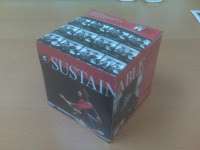
Rock Box


Finally the first of 4 "Rock Boxes" are finished!

Each box is a limited edition of only 500. It will have matching note cards that insert into it and can be kept on your desk to enjoy. They feature the classic rock and roll photography of Henry Diltz from the Morrison Hotel Gallery. Many of these photo's have never been published or seen before.

The first published box has photography of the the Rock stars who have "Sustained" through their crazy lifestyle, such as the Rolling Stones, the Who and CSN, and that's just the beginning. Just as we produce "sustainable" printing.

Better hurry and get yours today free, by calling me for an appointment: 818-335-1930 these will be collectors items soon, and with all 4 in your set you will be golden.

Best,
Mike


Print Works, from PIASC

One of the fastest growing ONLINE retail sites is Zappos. They have now adopted a four color magalog mailed to targeted prospects with a version featuring casual wear and another active wear, both using the selling power of print to bring people to their website, ready to buy. Similarly, a shirt company, Paul Frederick, has been steadily increasing its investment in print, reporting, "we now acquire more new customers through print than any other channel."

Tuesday, June 23, 2009

WOW interesting fact!

Did you know? Twenty percent less CO2 is used per year by a person reading a daily printed newspaper versus a person reading web-based news for 30 minutes a day.

Source: International Paper, "Down to Earth" Environmental Issues & Trends.

Direct Mail Marketing - Best Practices, Tips for Success, and How to Measure Results

In this digital age, direct mail marketing remains a powerful tool to connect with your audience. Tangible, personal, and highly targeted, d...